
How to Use a Portable Charcoal Grill
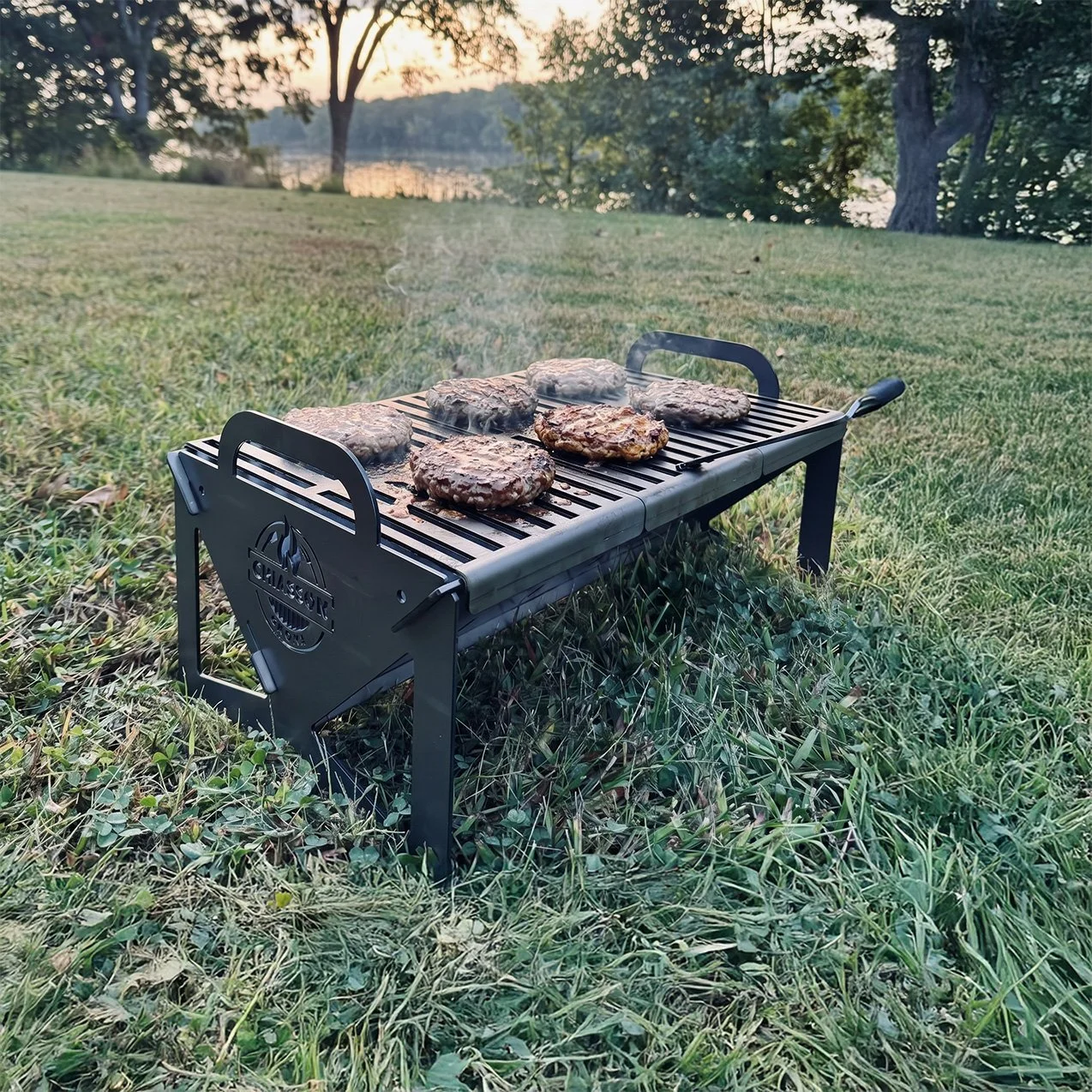
If you’ve never used a portable charcoal grill before, it can seem a little intimidating. How much charcoal should you use? When is it hot enough to cook? Where should the food go?
The good news is that charcoal grilling is much easier than it looks. Once you understand a few simple steps, you will be turning out juicy burgers, perfectly grilled steaks, crispy vegetables, and toasted sandwiches with confidence– even if you don’t have the best portable grill on the market yet.
Let's walk through everything you need to know.
Why Choose a Portable Charcoal Grill?
Portable charcoal grills are built for flexibility. They are small enough to transport but still large enough to cook satisfying meals for family and friends.
Unlike many disposable grills or lightweight models, a quality portable charcoal grill is built to handle years of cooking. It can travel from your truck to your campsite, then back home for another weekend of backyard grilling.
Portable charcoal grills are perfect for camping trips, fishing weekends, tailgating, beach cookouts (where allowed), hunting camps, RV travel, small patios, family picnics, and a lot more.
Perhaps the biggest advantage is the flavor. Charcoal naturally creates a smoky taste that gas grills simply cannot duplicate.
Gather Everything Before You Start
🔔Ships Free to the lower 48 within 1-2 weeks.
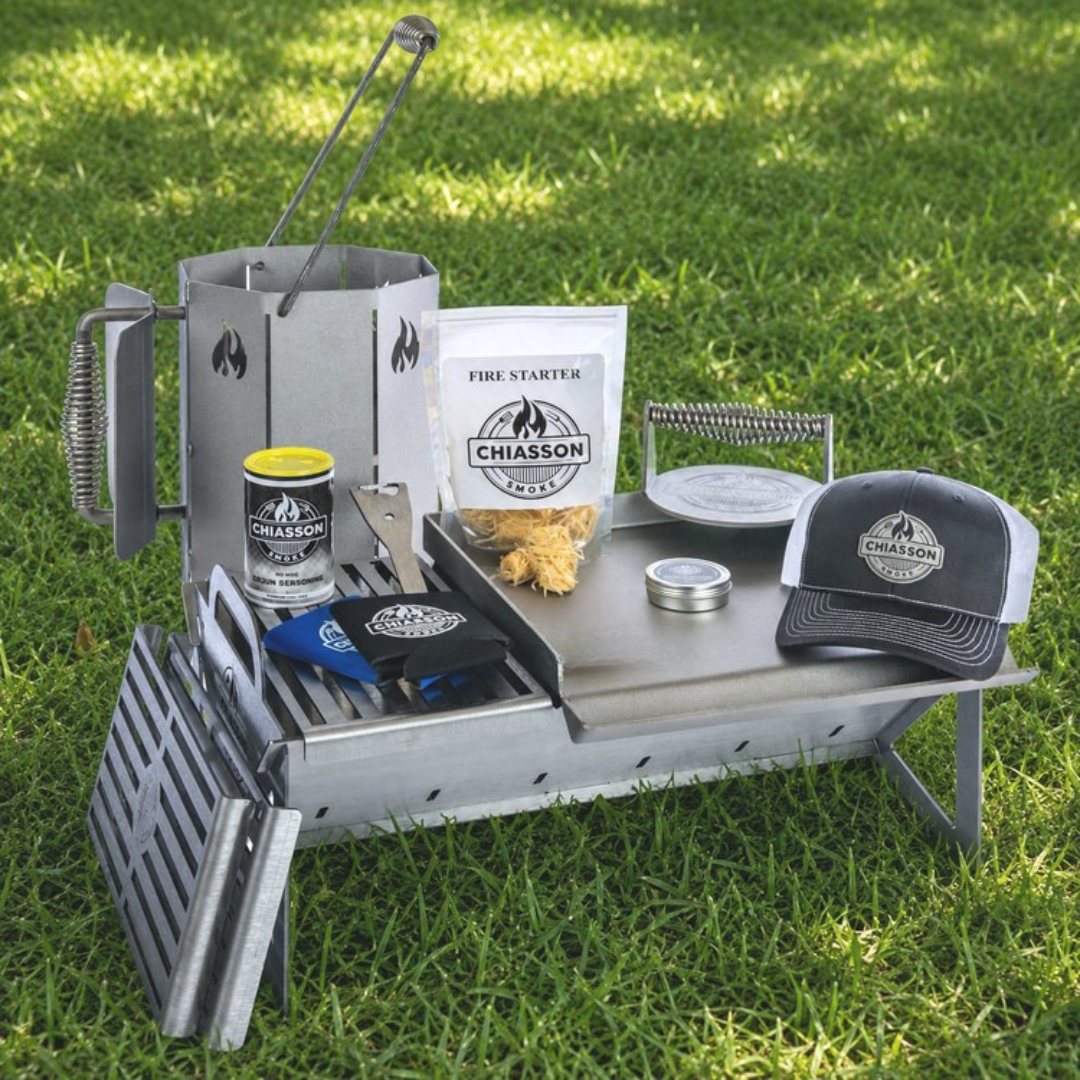
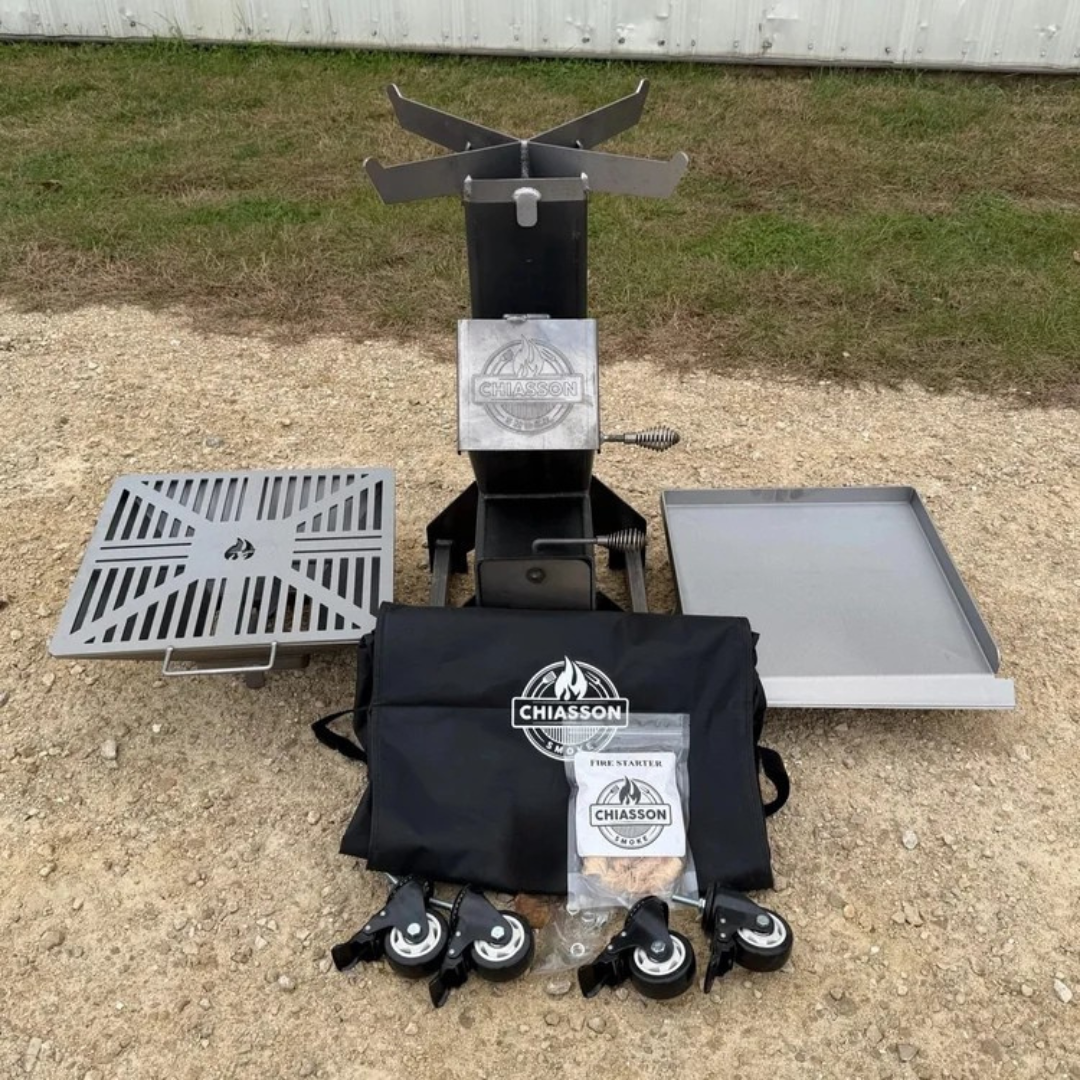
The ultimate outdoor cooking setup from Chiasson Smoke — built for those who want it all.
Perfect gift box for the outdoor cooking enthusiast!
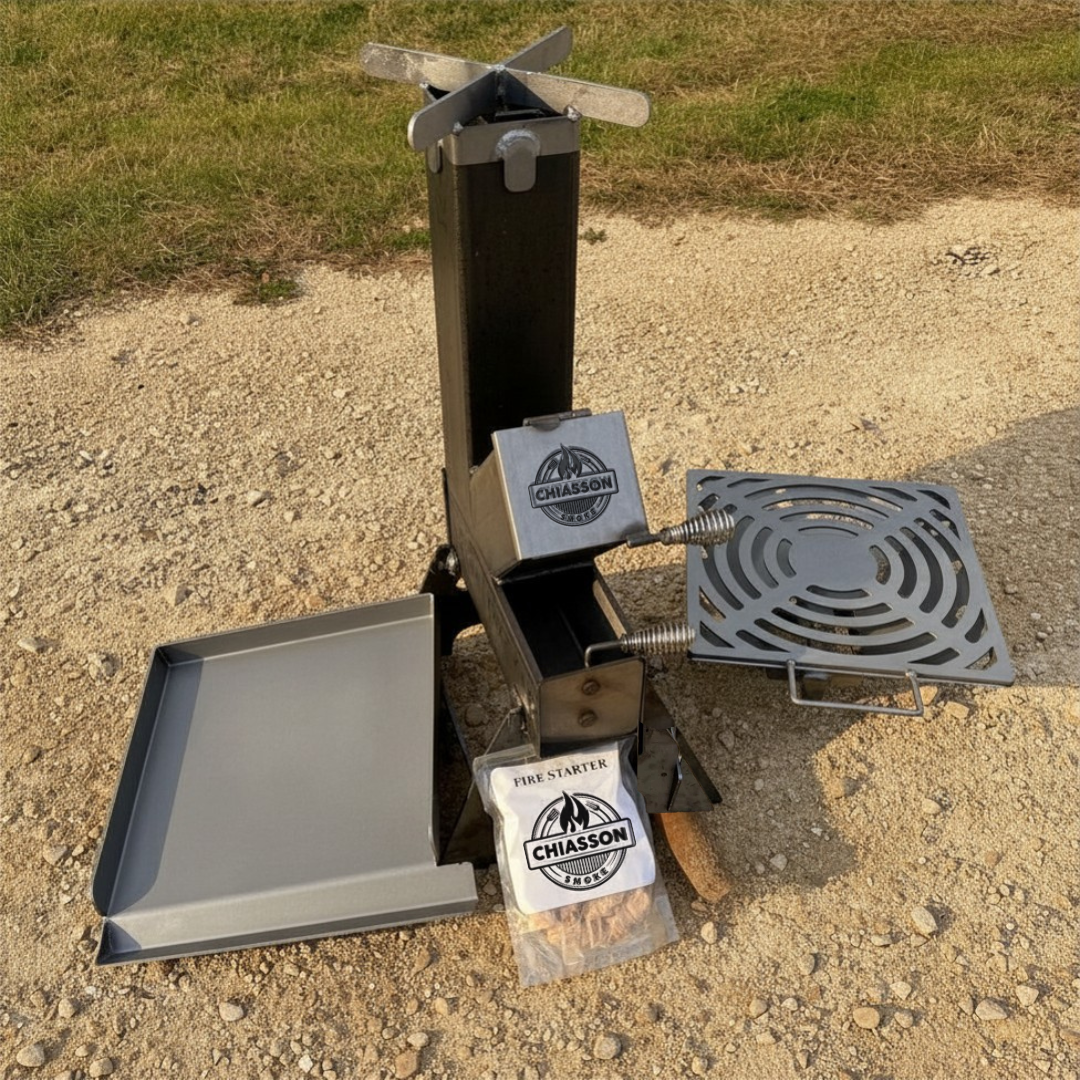
This package includes your choice of Hauler Grill — either:
Hauler with 12-inch Griddle, perfect for portability and everyday cooks, or
Hauler with Full-Length Griddle, the heavy-duty option for entertaining and big meals.
But that’s just the start. The Ultimate Package comes loaded with everything you need to fire up your next cookout:
Included in the Package:
Chiasson Smoke Fire Starter
2 Chiasson Smoke Koozies
Chiasson Smoke Hat
Carbon Steel Seasoning
Chiasson Smoke Cajun Seasoning
Stainless Steel Burger Smasher
Heavy-Duty Charcoal Chimney
This package gives you the full Chiasson Smoke experience: American-made quality, rugged design, and the tools to master any meal outdoors.
One of the biggest mistakes beginners make is lighting the grill before gathering everything they need.
Before you light the charcoal, have these items nearby:
Charcoal
Long lighter or matches
Grill tongs, Spatula, Heat resistant gloves
Meat thermometer
Plate for cooked food, and a separate plate for raw food
Paper towels
Cooking oil
Having everything within reach keeps cooking simple and helps prevent accidents.
Choose the Right Charcoal
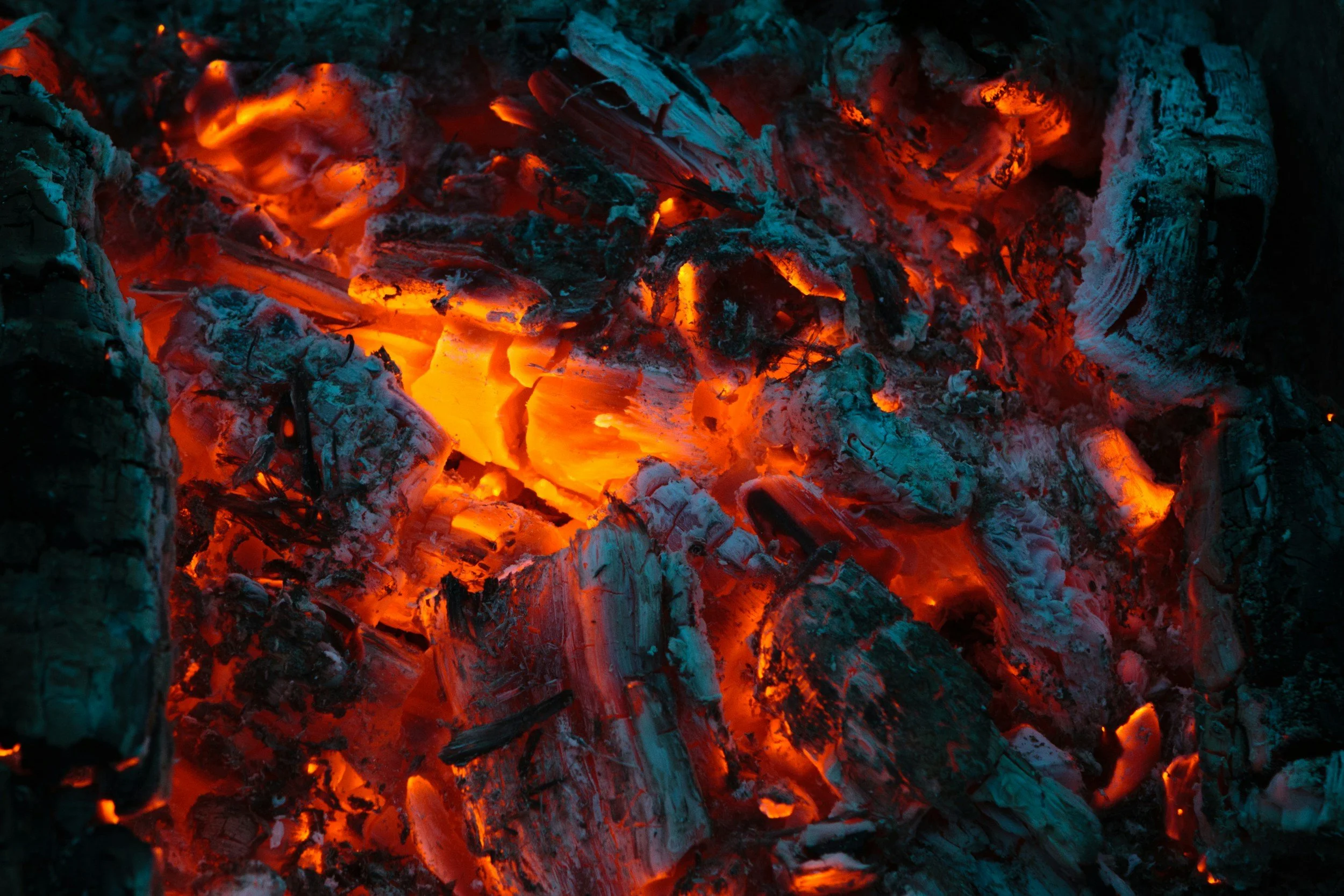
Not all charcoal is exactly the same.
There are two common types of charcoal.
Charcoal Briquettes
Briquettes are the most common choice. They burn steadily and provide even heat for a long time. They are a great option for beginners because they are predictable and easy to use.
Lump Charcoal
Lump charcoal is made from real hardwood. It usually burns hotter and lights faster than briquettes. Many grill enthusiasts enjoy the natural wood flavor, although the pieces vary in size and can burn faster.
Both types work well. The best choice often comes down to personal preference.
Light The Coals
Lighter fluid might seem like the fastest option, but it often leaves behind unpleasant smells and flavors if the charcoal is not fully ready before cooking.
Instead, use a charcoal chimney or natural fire starters.
A charcoal chimney is one of the easiest tools you can own. Fill the top with charcoal, place crumpled newspaper or a fire starter underneath, and light it. Within about 15 to 20 minutes, the charcoal will be glowing and covered with light gray ash.
Now it is ready to pour into your grill.
Set Up Your Charcoal
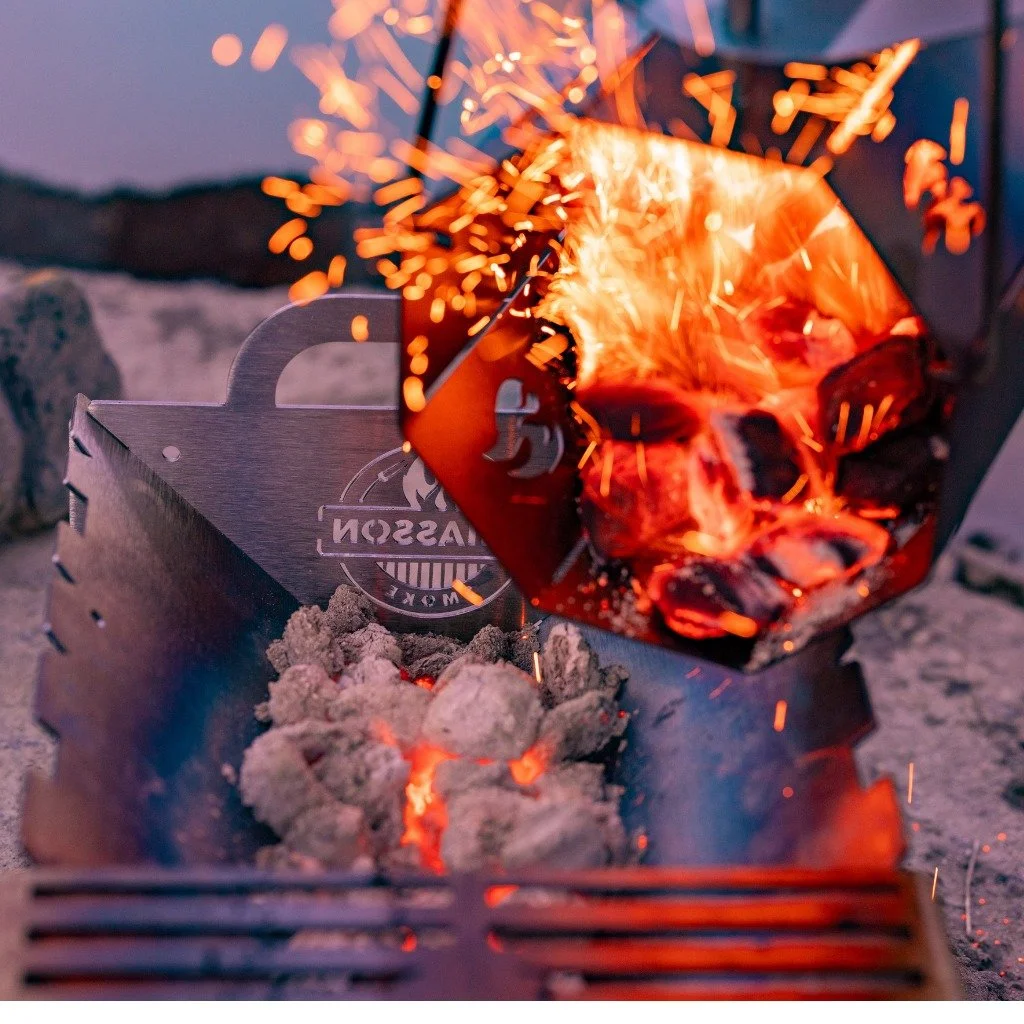
The way you arrange the charcoal changes how your grill cooks.
Even Layer
Spread the charcoal evenly across the bottom when cooking foods that need consistent heat, such as burgers, hot dogs, or vegetables.
Two Zone Fire
One side of the grill has charcoal while the other side stays empty.
This setup creates two cooking zones.
The hot side gives direct heat for searing.
The cooler side lets food cook more slowly without burning.
This is one of the best techniques for beginners because it gives you much more control.
If something starts cooking too fast, simply move it to the cooler side.
Wait Until the Grill Is Ready
Patience matters.
Many people place food on the grill too early. Freshly lit charcoal produces thick smoke and uneven heat.
Instead, wait until most of the charcoal is covered with a light gray coating. The fire should be glowing underneath, and the heavy smoke should have mostly disappeared.
That is when your grill is ready, and when it’s time to put meat on your charcoal grill.
Clean the Cooking Grate
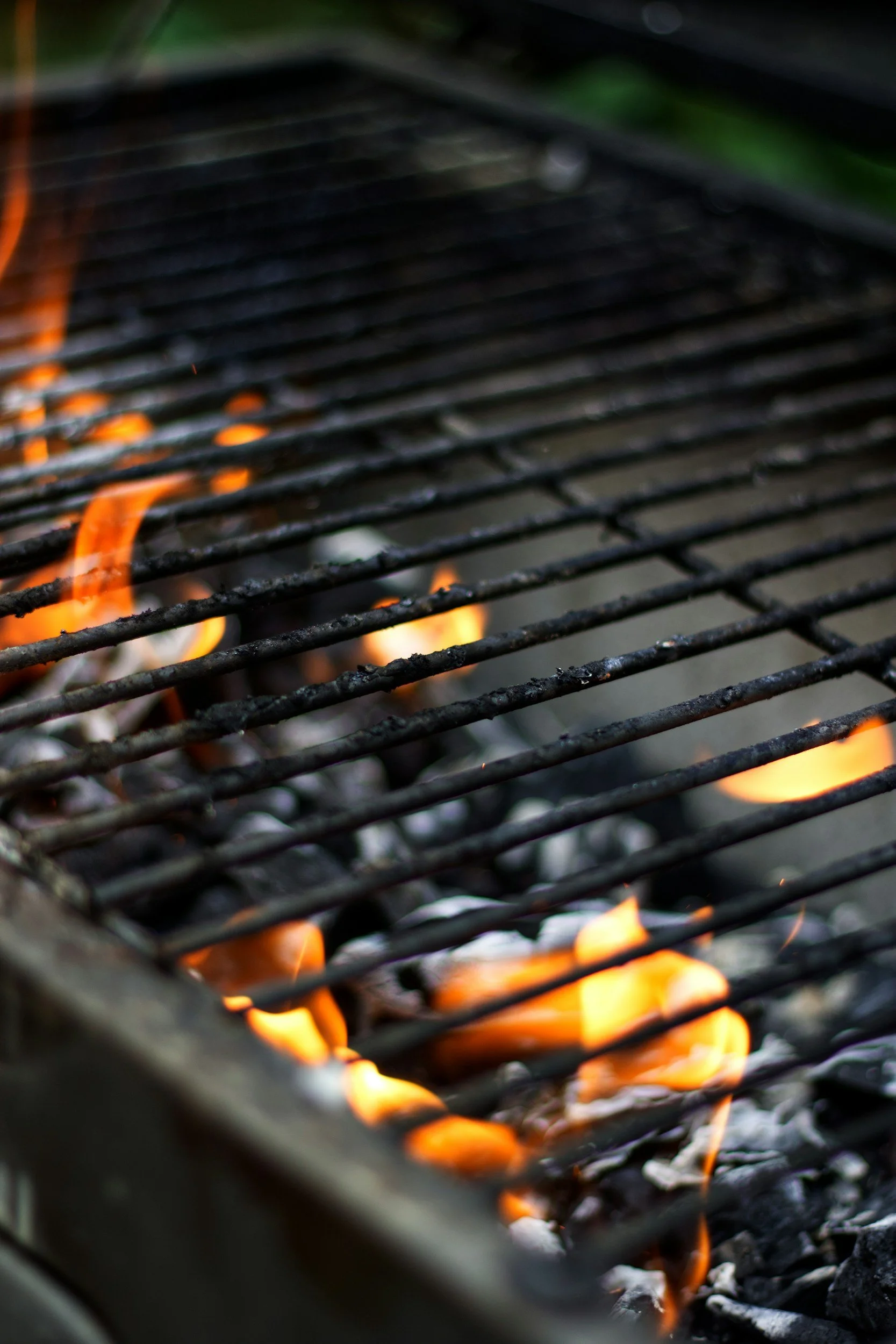
Even if the grill was cleaned after the last cookout, give it another quick cleaning.
Heat helps loosen old food.
Use a grill brush to scrape the grate while it is hot.
Then lightly oil the grate with a paper towel held by long tongs.
This helps keep food from sticking.
If a light clean isn’t enough, you might have to do a stronger grill grate clean.
Keep the Lid Closed
Many beginners lift the lid every few seconds to check the food.
It is tempting.
It is also one of the fastest ways to lose heat.
Every time you open the grill, hot air escapes, making it hard for the grill to stay lit.
Instead, let the grill do its job.
Open the lid only when you need to flip food, check temperature, or move something to another part of the grill.
Learn Direct and Indirect Cooking
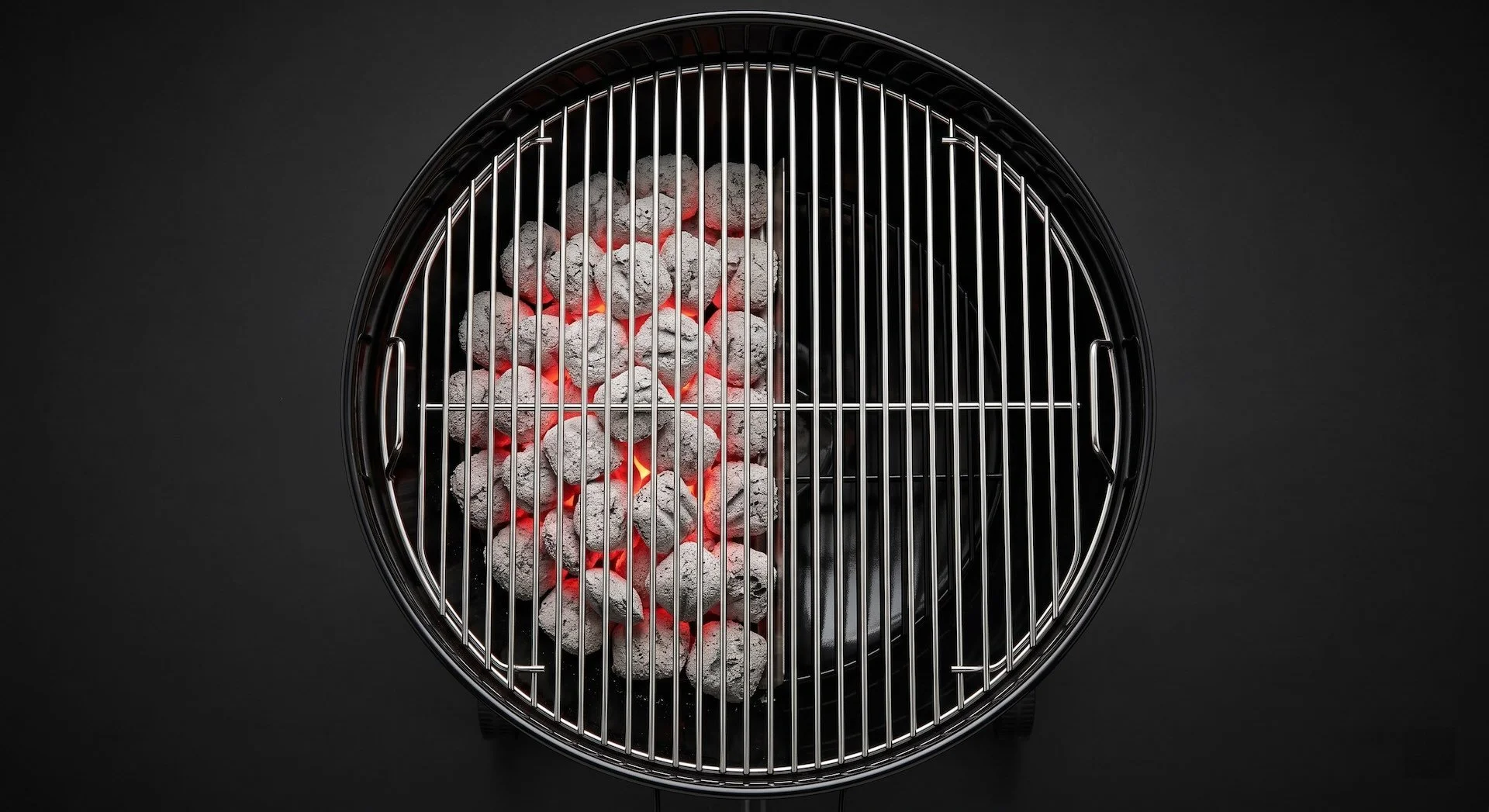
These are two of the most important ideas in charcoal grilling: direct vs. indirect grilling.
Direct Heat
Food sits directly above the charcoal.
This creates high temperatures that are perfect for:
Burgers
Steaks
Hot dogs
Kabobs
Thin pork chops
Indirect Heat
Food sits away from the charcoal while the lid stays closed.
This creates an oven-like environment.
Indirect cooking works well for:
Thick chicken breasts
Bone in chicken
Larger pork cuts
Thick sausages
Foods that burn easily
Many experienced grillers use both methods during the same cook.
Know When to Flip
You do not need to flip food constantly.
In fact, flipping too often can keep food from developing a beautiful crust.
Most burgers only need one flip.
Steaks often cook best with one flip as well.
Chicken may need a little more attention depending on the size of the pieces.
If food sticks to the grate, give it another minute.
When it is ready, it usually releases easily.
Use a Meat Thermometer
Guessing is not the best cooking method.
A simple meat thermometer removes almost all of the uncertainty.
Here are a few common safe temperatures:
Chicken: 165 degrees
Ground beef: 160 degrees
Pork: 145 degrees
Fish: 145 degrees
Checking the temperature only takes a few seconds and helps prevent overcooking.
If you don’t have a meat thermometer, there are other ways to know if your food is fully cooked.
Add Smoke Flavor
One of the best parts of charcoal grilling is adding real wood smoke.
Wood chunks or wood chips can create amazing flavor with smoke.
Popular choices include:
Hickory for beef
Apple for pork
Cherry for chicken
Oak for almost everything
You do not need a huge amount.
A single chunk of hardwood often provides plenty of smoke for an entire meal.
Do Not Crowd the Grill
Every piece of food needs space.
If burgers are touching each other, heat cannot move around properly.
Crowding also makes flipping more difficult.
Leave a little room between each item.
The food cooks more evenly and develops better color.

Let Meat Rest
When food comes off the grill, it is easy to start eating immediately.
Try waiting a few minutes.
As meat rests, the juices spread back throughout the food.
Cutting too early lets those juices run onto the plate instead.
Even five minutes can make a noticeable difference.
Cook More Than Just Burgers
Portable charcoal grills are surprisingly versatile.
You can cook:
Steaks
Brats
Chicken
Corn on the cob
Potatoes
Pineapple
Pizza
Shrimp
Fish
Bacon
Breakfast sandwiches
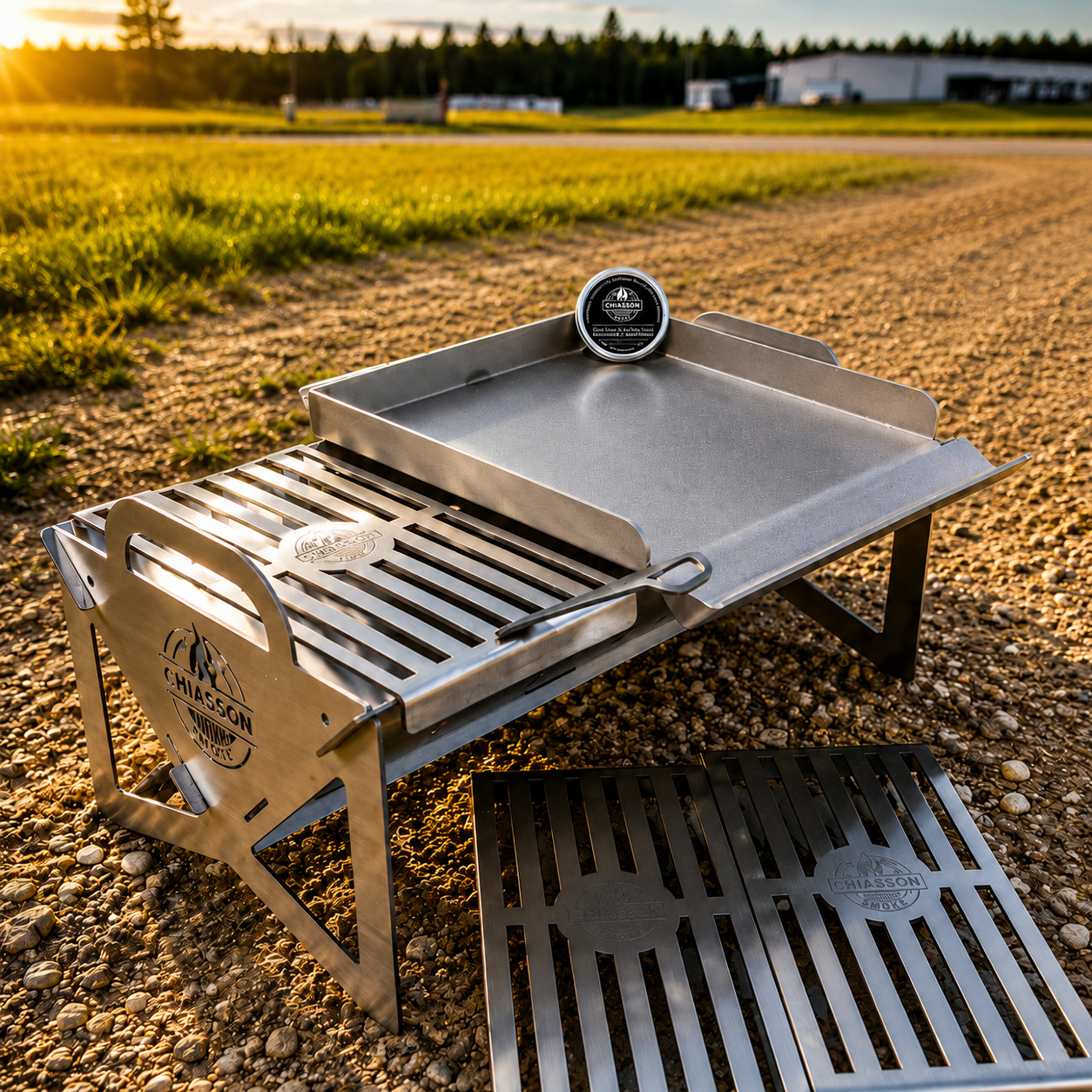
Some portable grills also accept flat top griddles, opening up even more possibilities like pancakes, eggs, bacon, fried rice, smash burgers, and fajitas.
Stay Safe Around the Grill
Charcoal grills are simple, but they deserve respect.
Always place the grill on a stable, nonflammable surface.
Keep children and pets away from the hot grill.
Never use a charcoal grill inside a house, tent, garage, or vehicle.
Carbon monoxide is invisible and dangerous.
Keep a small fire extinguisher nearby if possible.
Use long handled tools to keep your hands away from the heat.
Wear heat resistant gloves whenever moving the grill or adjusting hot parts.
Following a few simple grill safety tips can go a long way.
What About Wind?
Wind can make grilling more challenging.
Strong wind feeds the fire with extra oxygen, making charcoal burn hotter.
It can also blow ash onto your food. Not to mention that grill and fire pit sparks are more dangerous than you probably realize.
If possible, place the grill in a location that blocks strong wind while still allowing plenty of fresh air around the grill.
Never place it inside an enclosed area just to escape the wind.
How Much Charcoal Should You Use?
One question every beginner asks is how much charcoal is enough.
The answer depends on what you are cooking.
A handful of burgers may only require a moderate amount of charcoal.
Cooking for a large group or making thicker cuts of meat may require more.
The nice thing about portable charcoal grills is that they usually use less charcoal than large backyard grills. Their smaller size helps concentrate the heat, making them efficient while still producing excellent cooking temperatures.
With experience, estimating the right amount becomes second nature.
How to Shut Down the Grill
When cooking is finished, resist the urge to dump water directly onto hot charcoal.
Rapid cooling can create a mess and may damage some grills over time.
Instead, close the lid and shut the air vents.
Without oxygen, the charcoal gradually goes out.
Once everything has cooled completely, empty the ashes into an appropriate metal container.
Never place hot ashes directly into a plastic trash can.
Even ashes that look cold can hide hot embers.
Clean the Grill After Every Use
Cleaning takes only a few minutes and makes your next cookout much easier.
After the grill cools:
Remove the ashes.
Brush off the cooking grate.
Wipe away grease if needed.
Store the grill somewhere dry.
If your grill is made from carbon steel, follow the manufacturer's recommendations for maintenance. Some grills benefit from a light coat of cooking oil to help protect the steel between uses.
Taking care of your grill means it will be ready whenever adventure calls.
Practice Makes Every Cookout Better
No one becomes a charcoal expert after one meal.
Every cookout teaches you something new.
Maybe you learn that your grill cooks a little hotter on one side.
Maybe you discover your favorite vent setting for burgers.
Maybe you realize chicken tastes incredible over apple wood.
Those little discoveries are part of what makes charcoal grilling so enjoyable.
Unlike pushing a button on a gas grill, cooking over charcoal is a hands on experience. You learn how fire behaves, how food responds to different temperatures, and how small adjustments create better results.
Before long, lighting the charcoal, arranging the coals, and cooking dinner become second nature.
Enjoy the Experience
Portable charcoal grilling is about more than preparing food.
It is about slowing down for a while.
It is about gathering with friends around a fire after a long hike. It is about making breakfast at camp before the sun is fully up. It is about cooking burgers in the backyard while kids play nearby. It is about creating memories that last much longer than the meal itself.
The best portable charcoal grill is the one that gets used. It does not need to stay tucked away until the perfect weekend arrives. Bring it to the campground, the park, the tailgate, or simply out onto the patio after work.
Light the charcoal, wait for the coals to glow, and enjoy the process. With a little practice, you will discover that great charcoal grilling is not difficult at all. It is one of the most rewarding ways to cook, and every meal tastes just a little better when it comes fresh off a bed of hot coals.

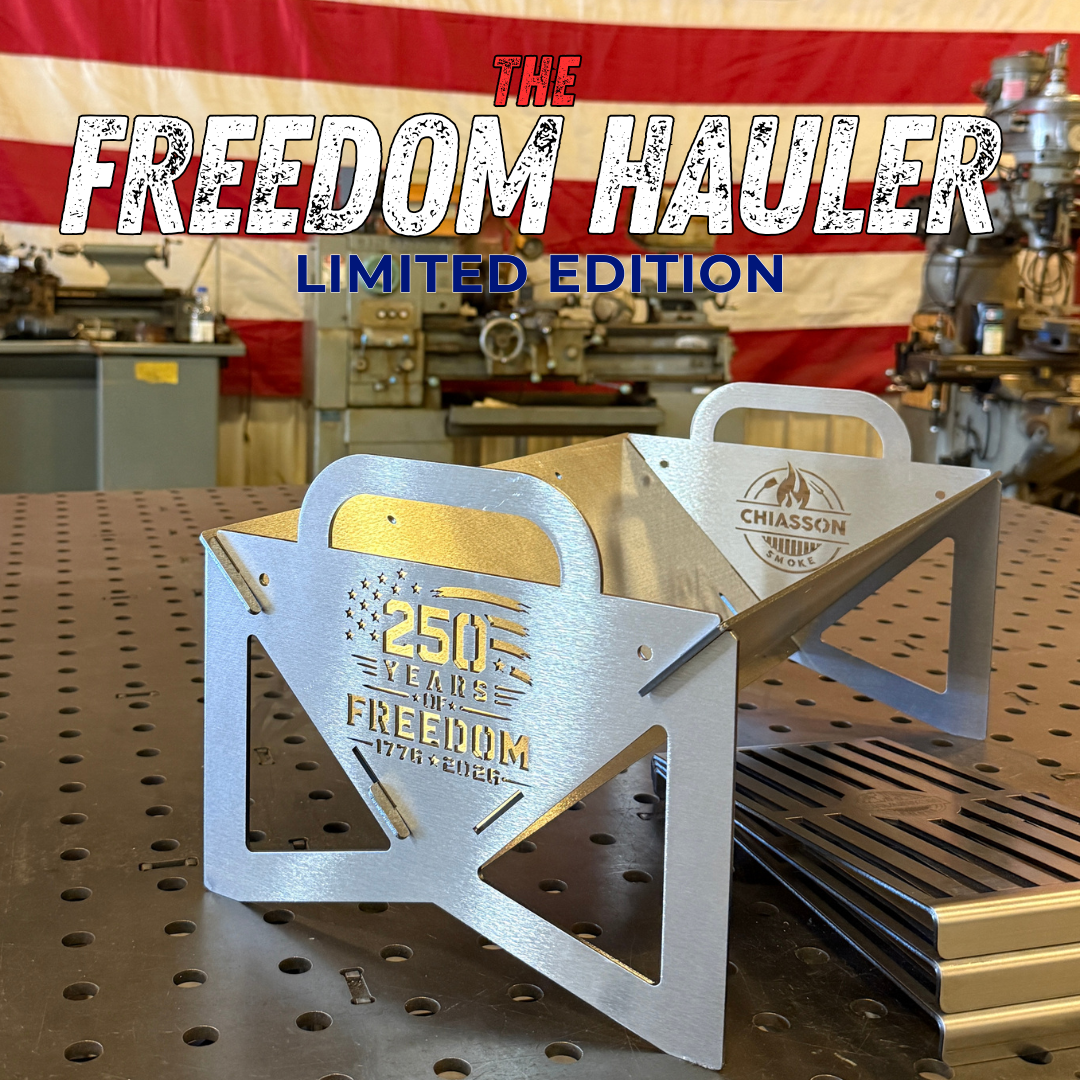
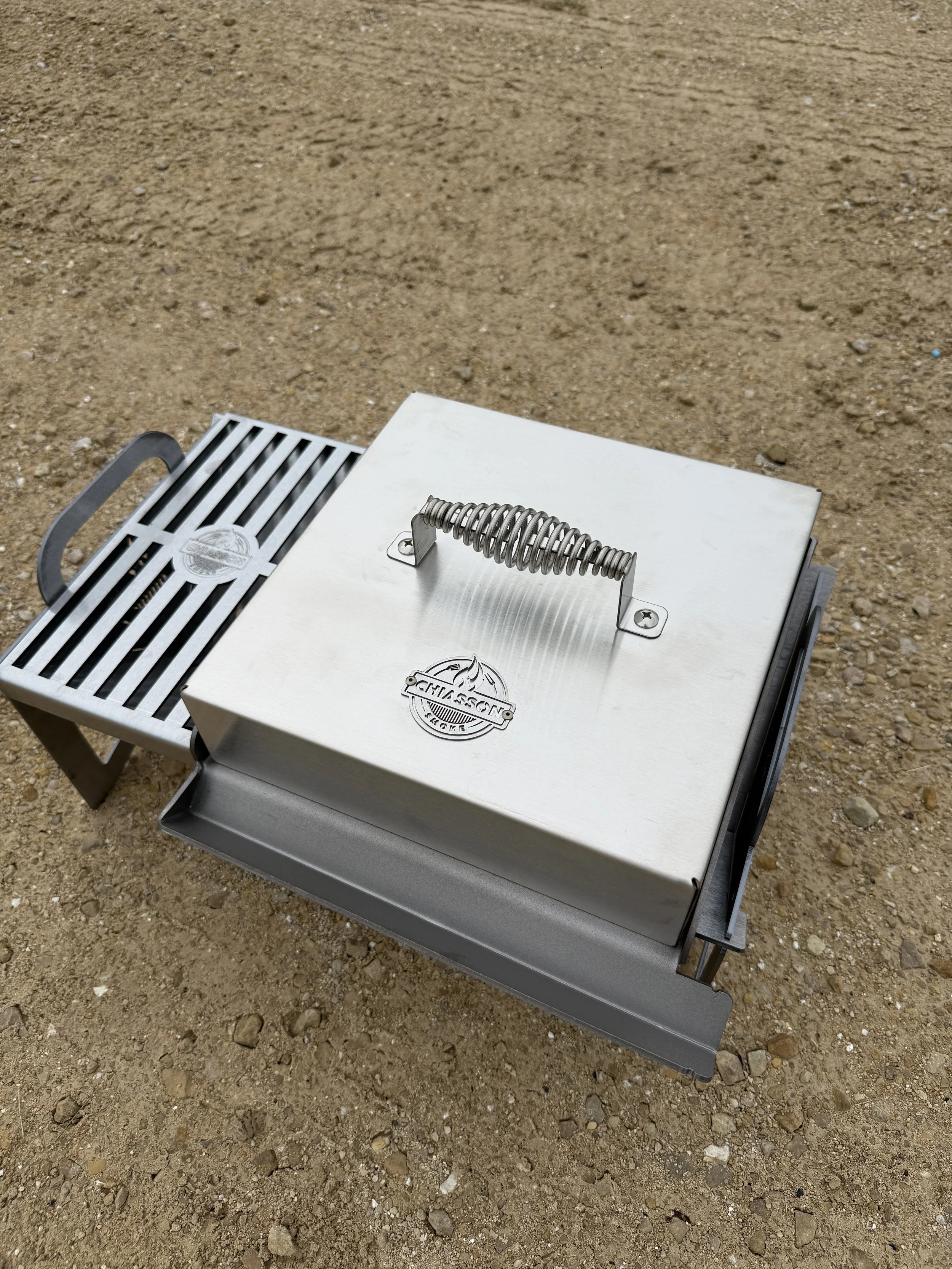
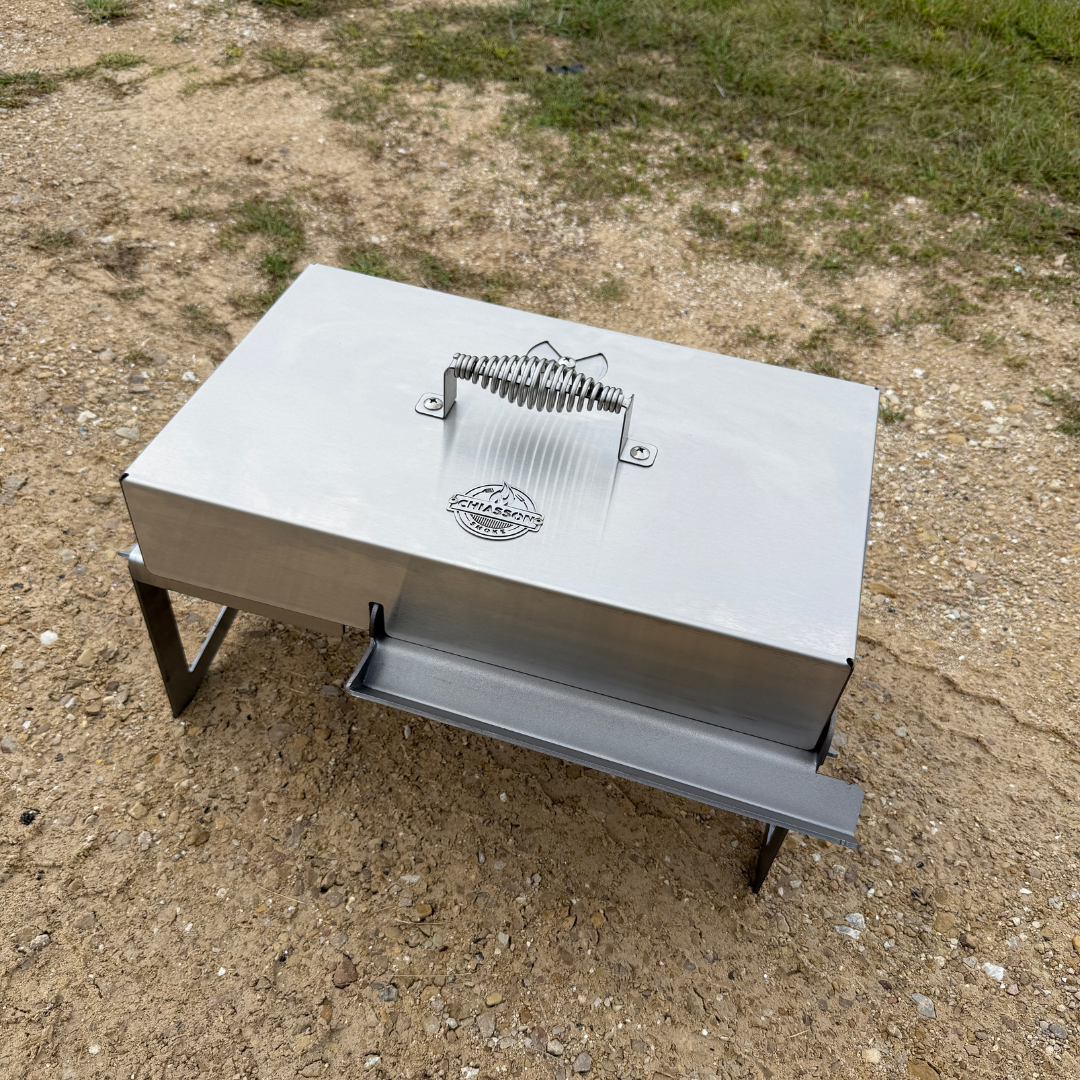
The Hauler Grill was made for people who love cooking outside but don’t want to haul around a big, bulky grill.
Its simple design packs down flat, and when you’re ready to cook, it goes together quickly with no tools needed.
Want even more ways to cook? Add one of our griddle options and make breakfast, smash burgers, fajitas, fried rice, and plenty more.