
Best Portable Barbecue Grills of 2026 [Confirmed]
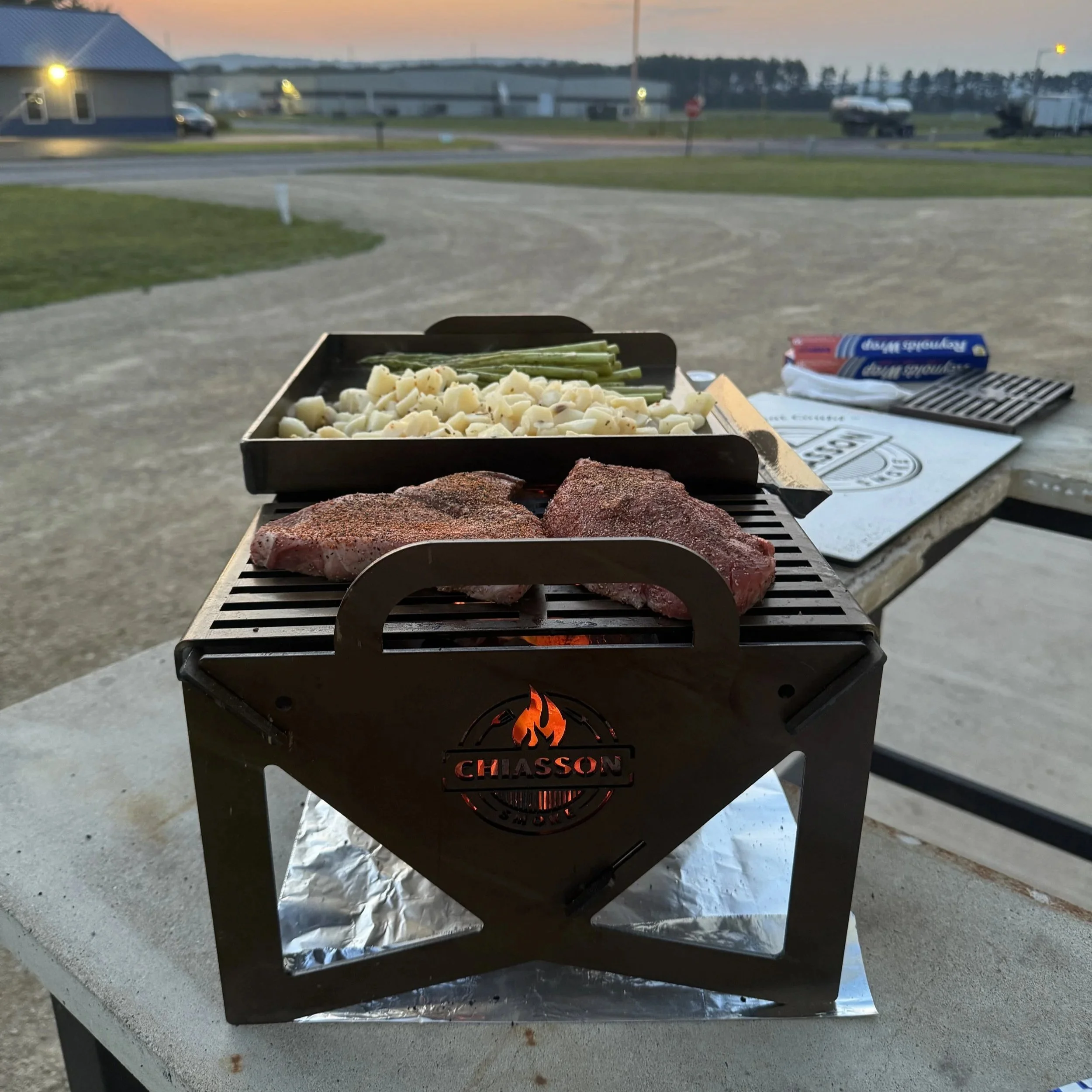
Portable grills should be easy to haul, simple to set up, and capable enough to cook well away from a full backyard setup. Whether you’re tailgating, camping, cooking in the backyard, or heading off-grid, the right portable grill can make the whole experience better.
The Best Portable Grills
Best Overall: Chiasson Smoke Hauler Grill
Most Portable Charcoal Grill: Chiasson Smoke Mini Hauler
Best Portable Gas Grill: Weber Traveler
Honorable Mention: Weber Q1200
Key Takeaways
The Chiasson Smoke Hauler Grill is our Best Overall pick thanks to its heavy-duty carbon-steel build, flat-pack design, removable grates, optional griddle setups, and built-in skewer slots.
The Chiasson Smoke Mini Hauler is the most portable charcoal grill option here, offering the same rugged raw-steel cooking style in a smaller, easier-to-haul package.
The Weber Traveler remains a strong portable gas-grill choice for anyone who wants propane convenience, push-button ignition, and a folding rolling design.
The Weber Q1200 earns an honorable mention as a compact tabletop propane grill with useful side tables and a straightforward setup.
Best Portable BBQ Grills
Best Overall
Chiasson Smoke Hauler Grill
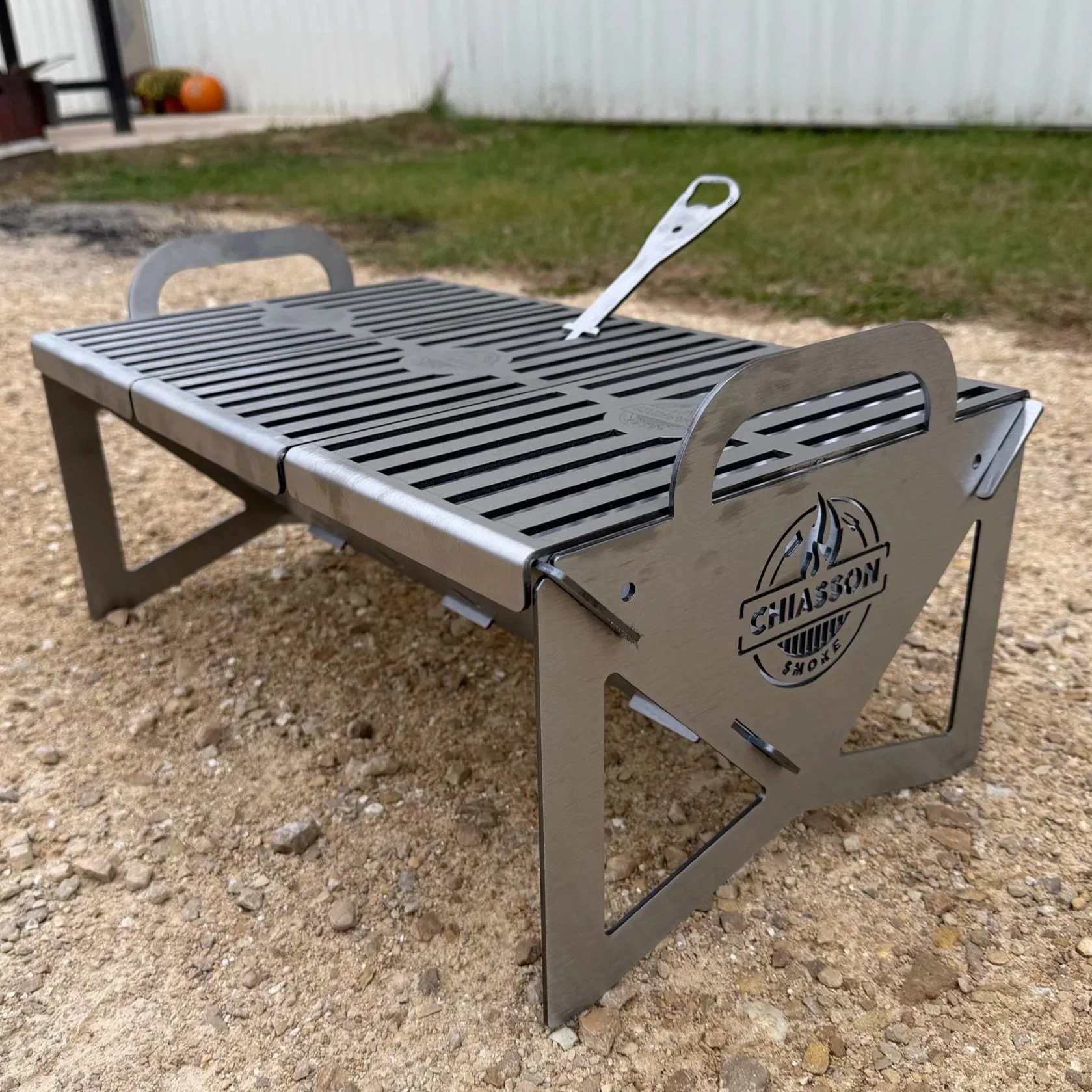
The Chiasson Smoke Hauler Grill is a compact, collapsible charcoal grill built for people who want a serious firepit-style cooking setup without dragging around a full-size grill. It’s made from raw carbon steel with no coatings, paint, or mill scale, and it’s designed to season like cast iron.
The Hauler’s biggest strength is its versatility. It includes three removable bent grates, integrated kabob slots, and a bent bottle opener/grate remover. Optional griddle setups make it even more flexible, with either a 12-inch steel griddle that fits alongside one grill grate or a full-length griddle with a drain.
This is not the lightest grill here, but it packs flat for storage and feels built for long-term use. For backyard cooks, camp cooks, and anyone who prefers charcoal or wood-fire cooking over propane, the Hauler is the standout.
Pros
Heavy-duty carbon-steel construction
Packs flat for storage
Three removable bent grates
Optional 12-inch or full-length griddle
Integrated kabob slots
Built in the USA
Cons
Heavier than smaller portable grills
Raw carbon steel requires seasoning and care
Specs
Fuel Type: Charcoal / live fire
Body: 1/8-inch carbon steel
Grates & Griddle: 10-gauge carbon steel
Finish: Mill-scale-removed raw carbon steel
Length: 21 in
Width: 12 in
Height: 12 in
Weight: 25 lbs without griddle; 30 lbs with 12-inch griddle; 37 lbs with full-length griddle
Grates: 3 removable bent grates
Optional Griddle: 12-inch or full-length griddle with drain
Most Portable Charcoal Grill
Chiasson Smoke Mini Hauler
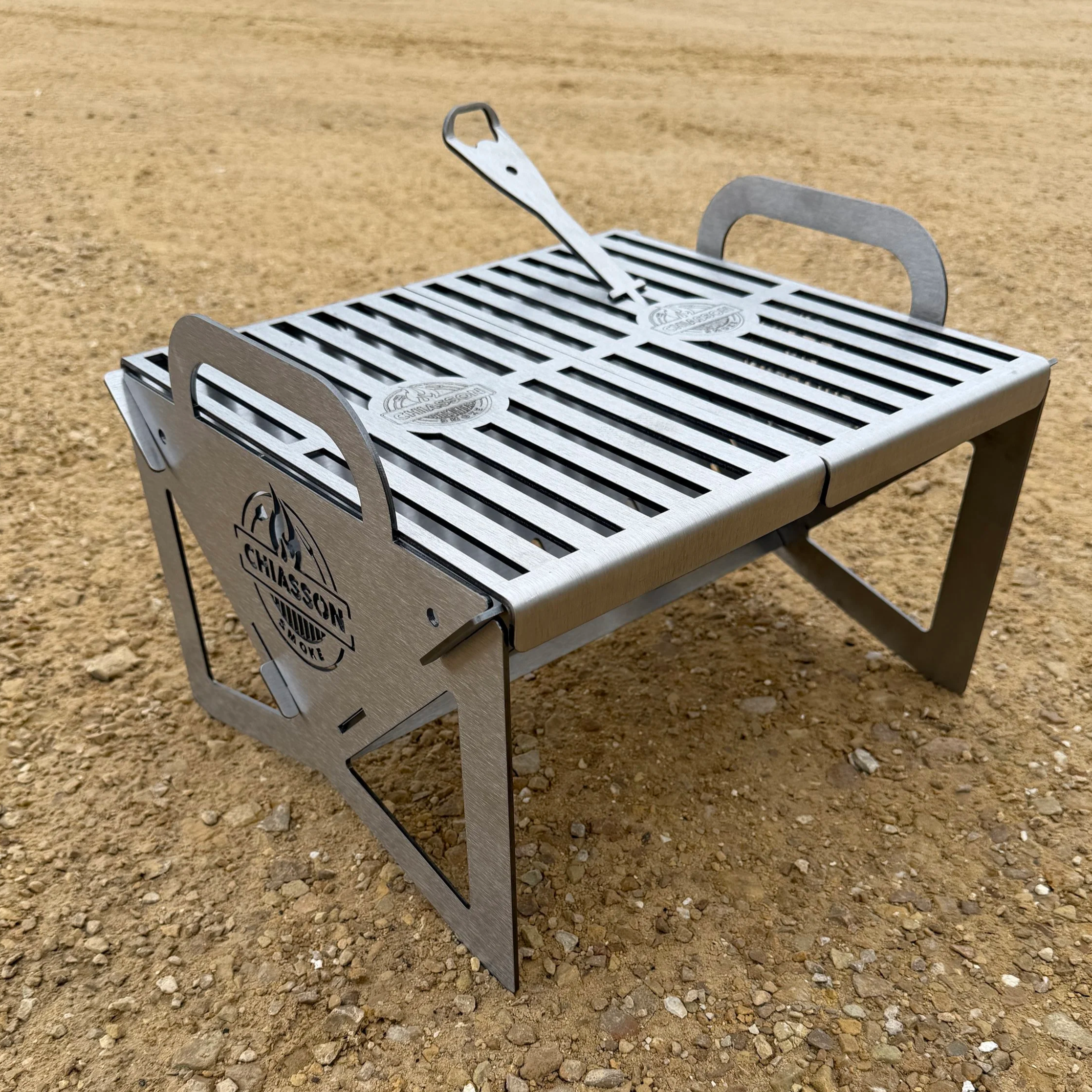
The Chiasson Smoke Mini Hauler takes the rugged build of the Hauler and shrinks it into a more compact package. It keeps the same raw carbon-steel construction, removable bent grates, optional griddle, integrated kabob slots, and bottle opener/grate remover, but in a smaller footprint.
At 13.5 inches long and 16.5 pounds without the griddle, the Mini Hauler is easier to move, store, and bring along for quick trips. It’s still substantial, but it feels more manageable for campers, tailgaters, and anyone who wants a smaller charcoal grill that doesn’t feel flimsy.
Like the full-size Hauler, it packs flat for storage, though the griddle does not attach when packed. It’s best for smaller groups or cooks who want compact charcoal performance without giving up steel thickness or modularity.
Pros
Compact raw-steel build
Packs flat for storage
Two removable bent grates
Optional 12-inch griddle with drain
Integrated kabob slots
More portable than the full-size Hauler
Cons
Smaller cooking area than the regular Hauler
Requires seasoning and maintenance (full guides portable grill usage are available)
Specs
Fuel Type: Charcoal / live fire
Body: 1/8-inch carbon steel
Grates & Griddle: 10-gauge carbon steel
Finish: Mill-scale-removed raw carbon steel
Length: 13.5 in
Width: 12 in
Height: 10 in with handle
Weight: 16.5 lbs without griddle; 25 lbs with 12-inch griddle
Grates: 2 removable bent grates
Optional Griddle: 12-inch griddle with drain
Best Portable Gas Grill
Weber Traveler
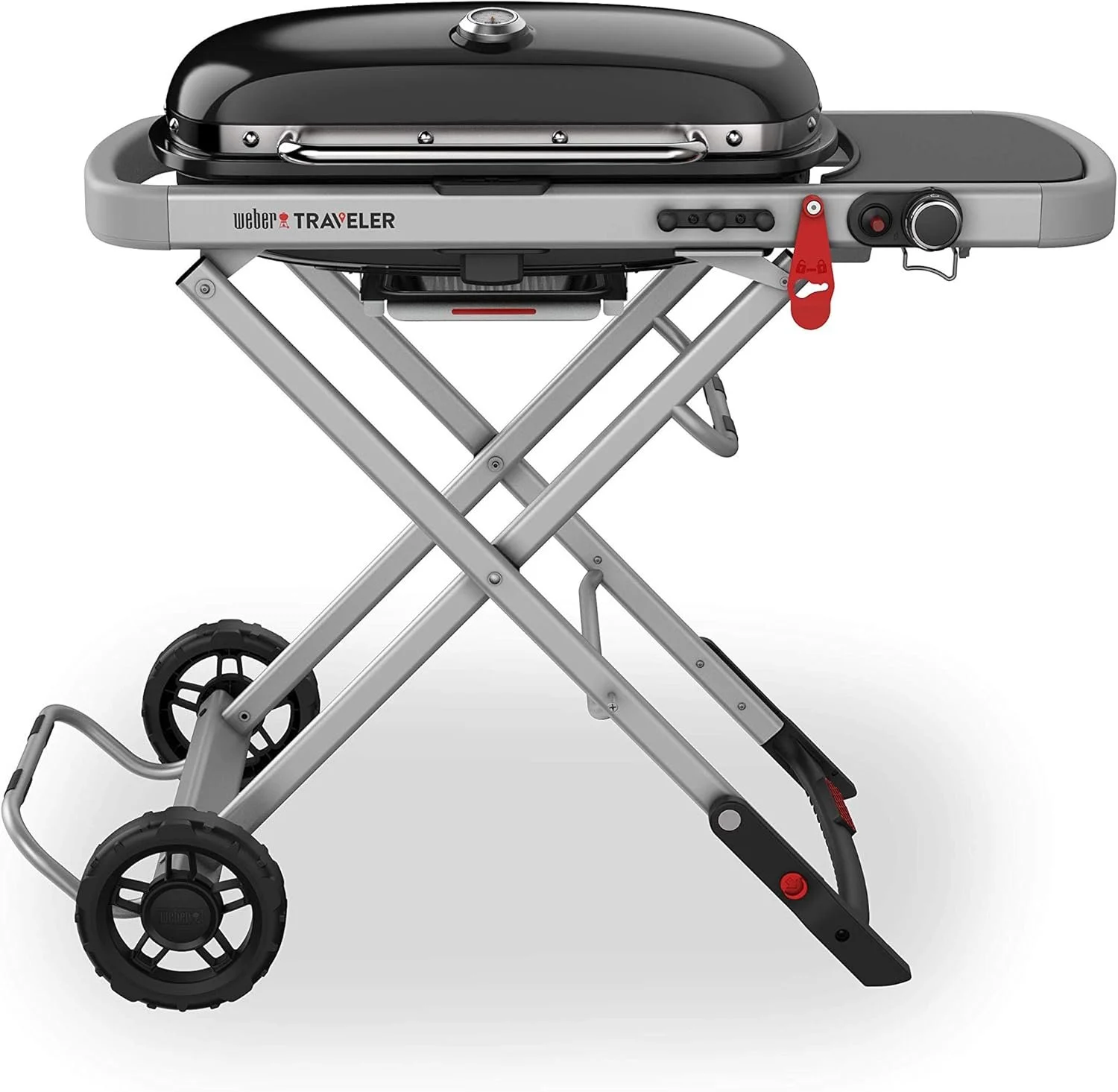
Photo from Amazon listing
The Weber Traveler is the best choice here for anyone who wants a portable grill with propane convenience. Its folding, rolling design makes it especially useful for tailgates, campsites, and road trips where you want a grill that sets up quickly and doesn’t require managing charcoal or firewood.
The Traveler’s appeal is ease of use. It folds down, rolls like luggage, and offers a built-in side table for prep space. Push-button ignition keeps startup simple, and the removable grates and grease tray make cleanup easier.
It is less modular than the Chiasson grills and does not offer the same live-fire cooking experience, but for propane grilling, it’s one of the most practical portable options.
Pros
Folding rolling design
Easy propane operation
Built-in side table
Push-button ignition
Removable grates and grease tray
Cons
Less rugged than raw-steel charcoal options
Single-burner layout may limit cooking flexibility
Not as compact when packed as flat-pack grills
Specs
Fuel Type: Propane
BTU Rating: 13,000 BTU
Cooking Area: 24.5 x 13.5 in
Weight: 24.1 lbs
Honorable Mention
Weber Q1200
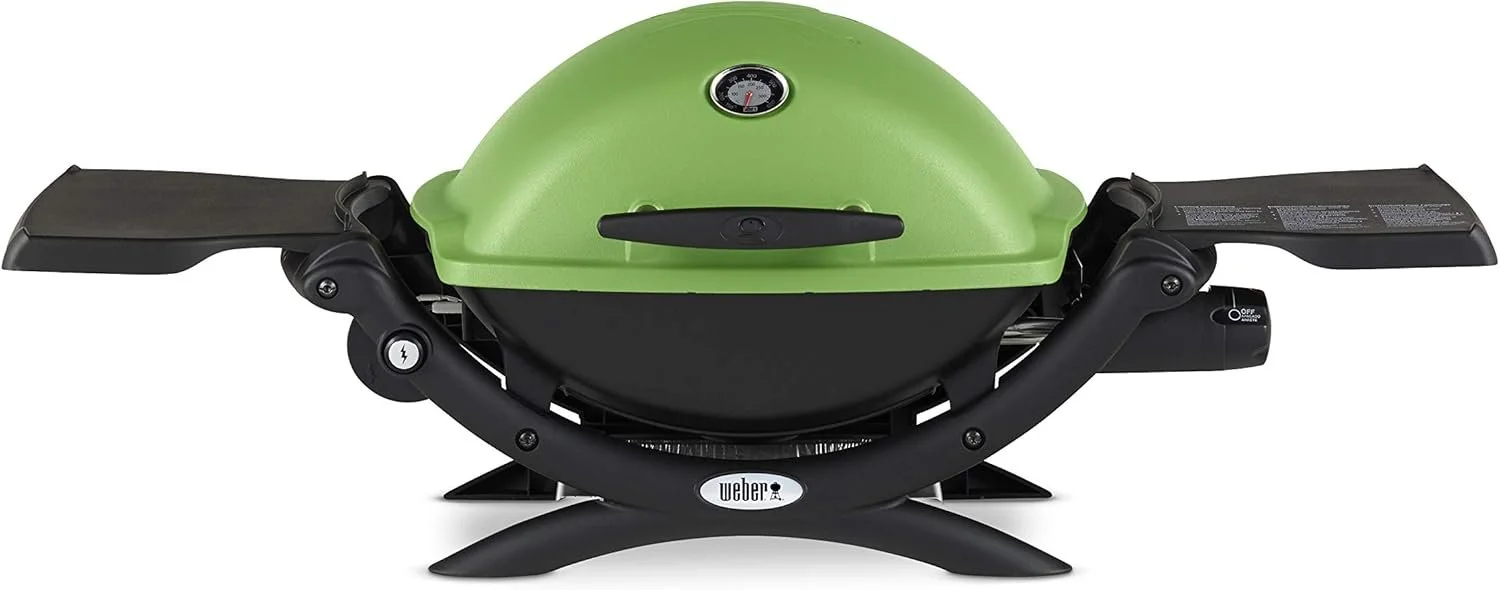
Photo from Amazon listing
The Weber Q1200 is a compact tabletop propane grill that works well for patios, campsites, and tailgates where you have a stable surface to cook on. It’s smaller and simpler than the Weber Traveler, but still offers a polished propane-grill experience.
Its fold-out side tables are especially useful for prep and serving, and the push-button ignition makes it easy to fire up. It’s also available in multiple colors, which gives it a little more personality than many portable grills.
The Q1200 is not as easy to roll around as the Traveler and does not have the same flat-pack utility as the Chiasson grills, but it’s a strong compact propane option.
Pros
Compact tabletop design
Fold-out side tables
Push-button ignition
Available in multiple colors
Simple cleanup
Cons
Requires a table or stable surface
Less portable than folding or flat-pack designs
Propane attachment can make the handle awkward to grab
Specs
Fuel Type: Propane
BTU Rating: 8500 BTU
Cooking Area: 16.5 x 12.5 in
Weight: 11.5 lbs
Things to Consider When Buying a Portable Grill
Fuel Type
Charcoal and live-fire grills offer a smokier, more traditional cooking experience. They’re great for campers and backyard cooks who enjoy managing heat manually, but they require fuel, fire-starting, cleanup, and more care.
Propane grills are easier to start, easier to control, and often cleaner to use. They’re a better fit for quick tailgates, road trips, and casual cooking where convenience matters most.
Size and Cooking Area
A larger grill gives you more room for burgers, steaks, vegetables, skewers, or breakfast on a griddle. A smaller grill is easier to carry and store, but it limits how much you can cook at once.
Weight and Portability
Portable does not always mean lightweight. Some grills are easy to carry by hand, some roll, and others pack flat for storage. Think about whether you’ll be carrying the grill far, loading it into a vehicle, or keeping it mostly around the backyard.
Build Quality
Raw carbon steel, like the Chiasson grills use, is rugged and built for high heat, but it needs seasoning and care. Painted or coated grills may require less immediate maintenance, but coatings can wear over time.
Extra Features
Side tables, removable grates, griddles, skewer slots, grease trays, bottle openers, and folding frames can make a grill easier and more enjoyable to use. The best extras are the ones that match how you actually cook.
Longevity
Keep any grill clean and dry when not in use. Raw steel should be seasoned like cast iron to protect it and build a better cooking surface over time.
How to Test Portable Grills
Testing portable grills comes down to evaluating how well they balance cooking performance, portability, and real-world usability. Instead of focusing on one specific metric, a good test looks at how the grill performs from setup to cleanup.
Start with Setup and Assembly
Take note of how the grill arrives and what it takes to get it ready. Look for:
Number of parts and tools required
Clarity of instructions
Time to assemble
Stability once fully set up
A good portable grill should be quick to assemble and feel solid once it’s in place.
Evaluate Portability
“Portable” can mean different things depending on the design. Consider:
Total weight
Whether it folds or packs flat
Presence of handles, wheels, or carry cases
Ease of loading into a vehicle
Try moving it the way you actually would—into a trunk, across a campsite, or onto a table.
Check Build Quality
Look closely at materials and construction:
Thickness and rigidity of metal
Welds, joints, and fasteners
Stability of legs or frame
Fit and finish of moving parts
Heavier-duty materials often last longer, but may trade off with portability.
Test Heat-Up and Temperature Control
For gas grills:
Time to ignition
Consistency of flame
Responsiveness of control knobs
For charcoal or wood setups:
Ease of starting a fire
Airflow control (vents, spacing)
Ability to maintain steady heat
You’re looking for predictable, controllable heat—not just maximum output.
Cook a Variety of Foods
Use foods that reflect how you’ll actually grill:
Quick items (hot dogs, burgers)
Thicker proteins (chicken, steak)
Flat-surface foods if using a griddle (eggs, vegetables)
Watch for:
Evenness of cooking across the surface
Hot and cool spots
Flare-ups or grease management
Assess Usability While Cooking
While the grill is in use, pay attention to:
Access to the cooking surface
Space for tools or food prep
Stability when opening lids or adjusting grates
Comfort of handles and controls
Small design details can make a big difference during real use.
Look at Cleanup and Maintenance
After cooking, evaluate:
Ease of removing grates or trays
Grease management systems
Residue buildup and how easily it wipes down
Long-term care requirements (like seasoning for raw steel)
A grill that’s hard to clean often gets used less.
Consider Versatility
Some portable grills offer more than just a basic grate. Check for:
Removable or adjustable grates
Griddle compatibility
Skewer support or multi-zone cooking
Ability to cook different types of meals
More versatility can make a grill useful in more situations.
Test Durability Over Time
If possible, use the grill multiple times. Look for:
Warping under heat
Loosening hardware
Wear on coatings or finishes
Changes in stability or performance
A good portable grill should hold up after repeated use, not just perform well once.
Match Performance to Use Case
Finally, judge the grill based on how you plan to use it:
Tailgating
Car camping
Backpacking
Backyard overflow cooking
The best grill isn’t always the most powerful—it’s the one that fits your needs without adding unnecessary hassle.
Frequently Asked Questions
Can I use a portable grill indoors?
No. Operating a portable grill indoors is dangerous due to fire risk and the potential for carbon monoxide buildup. If indoor use is unavoidable, it requires strong ventilation, close supervision, and fire safety equipment within reach—but grilling is safest when done outside.
How should I dispose of ashes?
Let the coals cool completely by soaking them with water, then place them in a metal container, fire pit, or an approved disposal area. Never throw away hot or warm ashes.
What surface should I use for a portable grill?
Set the grill on a nonflammable surface like concrete, brick, metal, gravel, or bare dirt. If placing it on grass or wood, dampen the area first. Avoid heat-sensitive surfaces like plastic unless you’re certain they can handle high temperatures.
How long does propane last in a portable grill?
A typical 16-ounce propane cylinder runs for about one to one and a half hours, depending on the grill’s output and how high the heat is set. Larger 20-pound tanks can extend cooking time significantly but usually require an adapter.
